How Do Lighting Ceiling Fans Work? Features and Applications
- November 5, 2026
- By Rotex Industries
- What Is a Lighting Ceiling Fan?
- How Do Lighting Ceiling Fans Work?
- What Are the Key Technical Features of Lighting Ceiling Fans?
- How Are Lighting Ceiling Fans Installed and Controlled?
- Where Are Lighting Ceiling Fans Commonly Used?
- What Should Buyers Check Before Selecting Lighting Ceiling Fans?
- Why Choose Rotex for Lighting Ceiling Fans?
- Conclusion
A lighting ceiling fan, as the name suggests, is a ceiling fan that delivers both the air and the light. It features a motor for turning fan blades and an LED assembly for the light. Lighting ceiling fans can replace a standalone ceiling fan and ceiling fans with LED lights are suitable for modern-day homes and commercial buildings. Buyers of lighting ceiling fans need to be aware of their working, specifications, installation and applications.
What Is a Lighting Ceiling Fan?
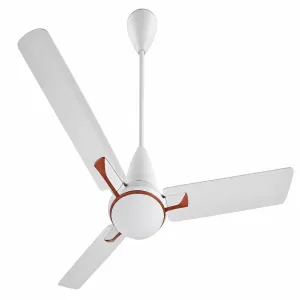
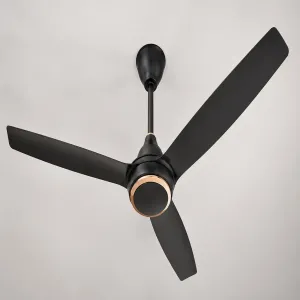
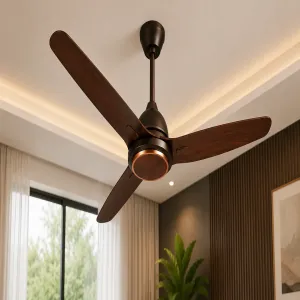
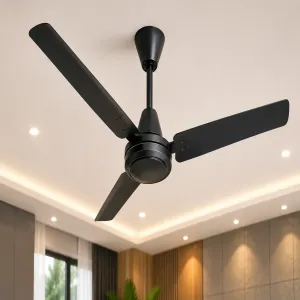
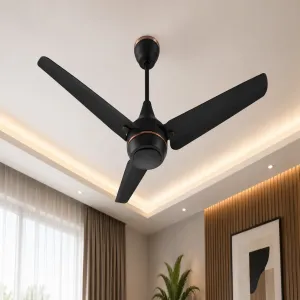
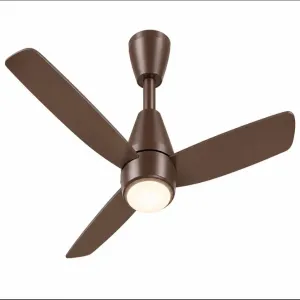
Lighting ceiling fan is a ceiling-mounted light fixture that incorporates a fan as part of the fixture. Most lighting ceiling fans include a motor, fan blades, LED light, driver, and electrical controls as a minimum requirement. An integrated LED ceiling fan delivers both light and air circulation in one fixture which can simplify lighting design and coordinate the look of the interior space. Fans can be controlled by fan speed and lights (fan and light together) individually (fan 1/fan 2), with wall switches, and with remote controls, or with integrated smart controls, if available.
How Do Lighting Ceiling Fans Work?
Ceiling fans with a light two synchronized wiring systems enable a fan with a light, with a system of airflow created by the fan and another system of light. The LED ceiling fans get the power to the light as it is funneled through the driver that controls the electricity sent to the light module in order to generate the light.
Although the fan and light in a model may be attached to the same mounting assembly and receive power from the same source, their operation is separate – as seen in models with independent lighting controls. How lighting ceiling fans work helps prospective buyers evaluate their operation, electrical needs and usefulness in various spaces.
Motor and Air Circulation System
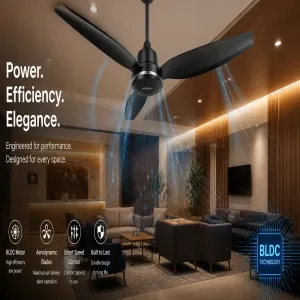
The ceiling fan motor converts the electrical energy into rotational motion that results in fan blades spinning through the air. Air delivery and air (blown) direction are affected by blade shape, diameter and pitch, fan size and fan speed. A BLDC ceiling fan uses an BLDC electric (brushless, direct-current) motor and electronic circuitry to determine the rotation for optimal performance. Performance will be different depending on the design of the fan, its airflow rating, and its operating conditions.
Integrated LED Driver and Lighting Solution
Integrated LED lighting technology is used in this type of lighting source. An LED driver is used to convert and stabilize the incoming electrical current according to the operation of the light module. In some models, the fixture may produce various brightness levels and colour temperatures or dimming features. Ceiling fans with LED lights integrate two functionalities in a ceiling fan, where the LED module is often not replaceable but the light module produces various lighting options.
Remote Receiver and Independent Controls
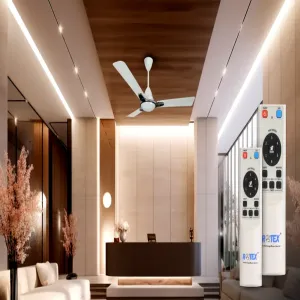
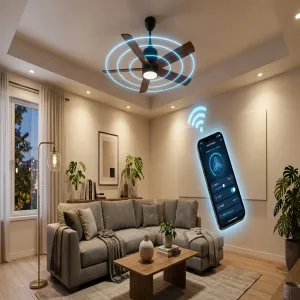
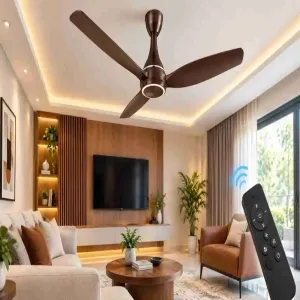
Remote control ceiling fans with lights models may have a receiver that receives signals to determine how to control which functions (fan speed, light switch and dimmer). The model you choose may have individual light and fan switches for each function to use the light and fan independently. You can find models with dimming and timer options or with a smartphone or remote control, but others have less control options.
What Are the Key Technical Features of Lighting Ceiling Fans?
Buyers of lighting ceiling fan features can look at tangible characteristics like – airflow, LED output, power consumption/motor speed. The table below sums up the range of technical parameters provided for the many big and high-priced models.
| Technical Specification | Details |
|---|---|
| Fan Sweep | 1200 mm |
| Number of Blades | 3 |
| Motor Power | 32 W |
| Input Voltage | 120–290 V |
| Fan Speed | 365 RPM |
| Air Delivery | 230 CMM |
| LED Light | 3 W, dimmable |
| Controls | Remote with speed, timer and light controls |
With these specifications, shoppers can compare airflow, energy use, and lighting controls. Browse the complete Rotex line-up and ask about the right LED ceiling fans.
LED Brightness, Wattage and Colour Temperature
LED ceiling fan specifications brightness is measured in lumens, while the consumption is measured in watts and the colour temperature is measured in kelvins (K). To put this into perspective, the more lumens, the brighter the integrated LED ceiling fan will be. The more watts, the greater power consumption of the light. For a relaxing room, using warm white LED and for occupying the space, using neutral or cool white.
Fan Speed, Air Delivery and Power Consumption
Lighting ceiling fans speed measured in revolutions per minute (RPM) indicates how fast the blades spin to circulate air delivery cubic metres per minute (CMM). The figures should be compared and considered in conjunction as, increased RPMs will not always result in increased airflow. The amount of power used by energy efficient ceiling fans compared to other conventional fans. BLDC energy saving technology may be used to reduce energy consumption by the fan motor by total power usage (fan and light) when both fan motor and LED light fittings are operational.
How Are Lighting Ceiling Fans Installed and Controlled?
The lighting ceiling fan installation is to be adequately supported and prepared to be hung with the lighting fixture consisting of appropriate mounting hardware with the same electrical connections. Using the support available, the installer should examine ceiling, supply voltage, wiring details, the user's manual mounting instructions, and clearance to walls, furniture and floor.
You may have wall switches, remote receivers or compatible smart devices controlling the fixture, based on the model. All electrical wiring should be carried out by an experienced electrician with the power turned off. Check with the seller if remote control ceiling fans with lights are separately controlled and fitted with its own fan/light switch prior to installation.
Where Are Lighting Ceiling Fans Commonly Used?
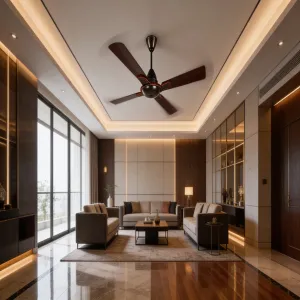
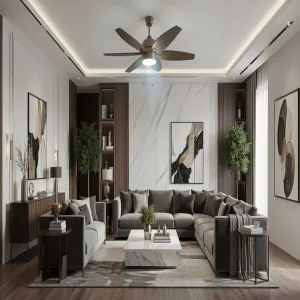
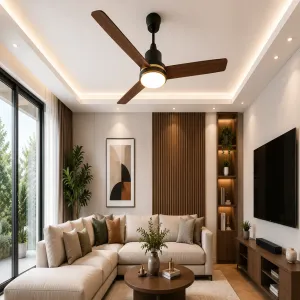
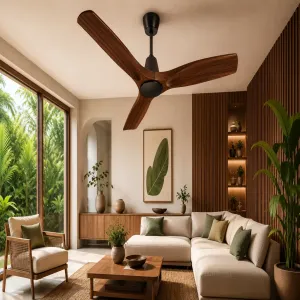
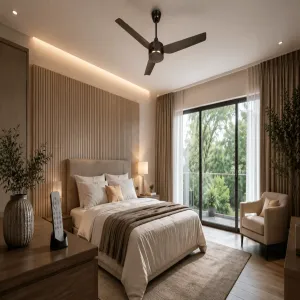
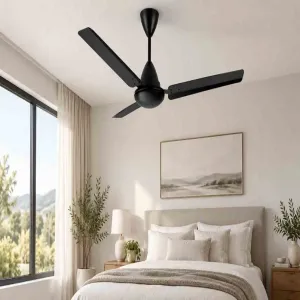
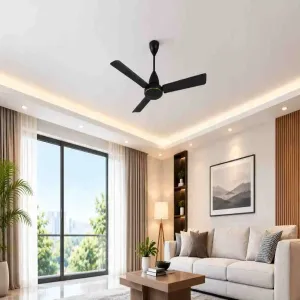
Lighting ceiling fan applications include living room, bedroom, high ceiling room, rest room, library, etc are spaces which require both the presence of a ceiling fan as well as a ceiling mounted light source to decorate any room with beauty. Here are some of the uses of ceiling fans with LED lights:
- Offices: Assist in general lighting and air circulation.
- Bedrooms: Combine the circulation of the air with common lighting.
- Living rooms: Shine light from overhead as well as move air through rooms while in chairs.
- Cafes and restaurants: Assist in the arrangement of ceiling lighting and air circulation with the dining atmosphere.
- Commercial interiors: Provide an integrated fixture for their reception, waiting room, and other indoor environments.
The ideal one will be determined by various factors such as size of the room, height of the ceiling, number of lights needed and operating conditions. Some bigger rooms or specific properties will need their own lighting and ventilation.
What Should Buyers Check Before Selecting Lighting Ceiling Fans?
Lighting ceiling fan selection will require performance, construction and after-sales assistance. Buyers look for lighting ceiling fan suppliers in India like Rotex must consider the following when choosing:
- Fan sweep: Match the span of your blade to the size of the room and the layout of your installation.
- Air delivery: To evaluate the performance of air flow, look at your unit's CMM ratings.
- Lighting output: Check LED lumens, wattage and colour temperature.
- Current usage: Separate the motor and LED power.
- Controls: Check remote operation, dimming and independent switching if needed.
- Warranty and spare parts: Inquire into coverage, replacement of LED module and service.
- Supplier support: Check the product documentation, technical support and delivery arrangements.
When customers opt for a certain supplier, they should request for technical datasheets and written warranty policy. These documents can help buyers to select from different products on the same range and also avoid potential risks when making the order.
Why Choose Rotex for Lighting Ceiling Fans?
Buyers looking for lighting ceiling fans manufacturers in India and sourcing in residential or commercial requirements can consider Rotex. Buyers must contact the company for the latest list of lighting ceiling fans, technical details, sourcing or manufacturing status, and inquire about quality standards.
It is also recommended to ask about distribution networks, order quantities and support after-sales for potential companies of interest. Buyers looking for OEM or private labels lighting ceiling fans dealers in India should check with the product range, if it is available for that product category.
See our relevant range of products from RotexFans and email us for availability, specifications and pricing.
Conclusion
Integrated LED lights combined with mechanical fans in one integrated fixture. These can be motor type, design of blades, lighting output, power use and the control system. Each model's specification and installation data should be compared to determine the ideal lighting ceiling fans for the environment.
| Contact or visit leading lighting ceiling fan suppliers in India, RotexFans to know more about lighting ceiling fans. |
Yes. You may be able to control the fan separately from the light, and many models do provide this feature. However, this will vary depending on the type of model you buy and how it is controlled.
They both require electricity to power functions. Total usage depends on wattage of LED's and motor, and the number of hours of operation.
Replacement depends on the design. LED module replacement is possible for some models and other models, may need to be serviced or replaced as a whole assembly.
Yes. They may be suitable for offices, reception areas and some other commercial interiors providing airflow, brightness and mounting can be achieved.
Verify technical data, product literature, warranty coverage, availability of spare parts, delivery conditions and the vendor's after-sales service.
Buyers can obtain information on the availability, technical specifications, price and supply of lighting ceiling fans from Rotex.