Ceiling Fan Maintenance Tips to Increase Lifespan & Performance

- May 15, 2026
- By Rotex Industries
- Advantage of Regular Ceiling Fan Maintenance
- Cleaning Your Ceiling Fan Blades
- Tightening Screws and Inspecting the Mounting
- Blade Balancing
- Motor Maintenance
- Electrical Component Inspection
- Seasonal Maintenance Tips
- Repair vs Replacement -How to Decide
- Benefits of Modern BLDC Ceiling Fans
- Why the Quality of Your Fan Matters
- Ceiling Fan Maintenance Checklist
- About Rotex
- Conclusion
Your complete guide to better airflow, lower bills and a longer-lasting fan
One of the most important and reliable Indian home or office appliances is a ceiling fan. It operates silently for hours, in scorching summers and monsoons, with barely a flick of a switch. But it is also the simplicity which renders it so reliable; that is the reason why most of us forget to take care of it. Even a good compact ceiling fan or a big hall model can begin to wear out and only noises can be produced without regular maintenance, even though it should last a long time.
This blog will discuss all the information you need to know about maintaining a ceiling fan – cleaning the fan blades, checking the motors, and so on. To ensure that your ceiling fan will offer maximum performance over a number of years. We also indicate where and why it is crucial to upgrade and why Rotex Ceiling Fans by speed bath tech are the intelligent bet in the contemporary Indian house.
Common Issues
- Decreased airflow owing to dust-covered blades.
- Wobbling, which puts a strain on the motor and ceiling mount.
- Increasing amount of electricity of overworked motors.
- Capacitor breakdown and complete burnout of the motor.
- Loose mounts and broken wiring can cause safety hazards.
Advantage of Regular Ceiling Fan Maintenance
One of the easiest methods of safeguarding a long term investment is by keeping your fan regularly maintained. Regardless of whether you have a standard model or a convenient remote fan that is smart-controlled, the advantages of routine maintenance are the same:
- Improved Airflow: Clean blades are balanced and move the air more effectively and uniformly.
- Reduced Electricity Bills: A Healthy motor will operate at optimum load and it will also absorb only the necessary amount of power.
- Extended Lifespan: Consistently conducting checks would extend the working life of a fan by a few years.
- Lower Repair Costs: Small issues identified at an early stage will save on the cost of repairing a big problem in the future.
- Better Protection: Tight screws, good wiring and a secure mount guard your home.
1. Cleaning Your Ceiling Fan Blades
The most widespread cause of poor fan performance is dust. When accumulated on the blades, it causes uneven weight and airflow disruption and causes the motor to work more intensely. When your white ceiling fan is unclean, or any other light-coloured model, it also becomes obvious at a glance, which is a good reminder to maintain a regular cleaning routine.
Optimal Cleaning Frequency
- 1 time a month in summer and peak usage.
- After every two weeks in dusty conditions.
- At least once a month during monsoon to prevent moisture build-up
Safe Cleaning Tools and Methods.
- Use a microfibre cloth or an old pillowcase – these do not propel dust.
- Slightly wipe off hard grime with a small amount of soap solution.
- Always avoid spraying liquids on the fan body or motor.
- Step ladder – always use a ladder step not chairs or unsteady surfaces.
- Take an example of a small ceiling fan duster with a long handle in case of models that are hard to reach.
2. Tightening Screws and Inspecting the Mounting
All fans spin and vibrate and gradually loosen the screws. A loose blade arm varies the blade angle and makes the airflow lower; a loose ceiling mount is a real safety risk. Do this test quarterly.
What to Check Every Quarter!
- Screw all the blade bracket screws with the right screwdriver.
- Inspect the canopy and down rod to determine whether they are moving or cracking.
- Be sure that the mounting bracket is firmly attached to the ceiling box.
- Ensure that the down rod is wobble-free or the wobble is not playful when the fan is switched off.
- In case of wobbling even after tightening, move on to blade balancing (see below)
3. Blade Balancing
A vibrating fan causes a constant load to the bearings and ceiling mount. You may have bought a fan of a brand that even the fans of excellent quality can have issues in the absence xof proper maintenance and can become unbalanced.
Causes of Wobbling
- Varying dust build-up on a blade or blades.
- A curved or crooked blade arm.
- Blades that are not at right angles to one another.
How to Restore Balance
Purchase a balancing kit available at most hardware stores. Attach the test weight to the centre of each blade and turn on the fan and determine which blade minimizes wobbling. Place the self-adhesive counterweight in that location. This cheap solution can fully stop the wobble on most fans.
4. Motor Maintenance
Majority of fans manufactured by reputable Fans Manufacturers in India have enclosed motors which need minimum servicing. Nonetheless, the old induction motor fans can still require periodic maintenance to ensure that the bearings are running without noise.
Motor Care Tips
- Verify the manufacturer manual on oil ports- in case there are oil ports, add two to three drops of non-detergent motor oil at least once a year.
- Do not over-lubricate – too much oil will attract dust and can clog the motor.
- So, the problems associated with a modern sealed BLDC fan motor are:
- When the fan makes a grinding/humming sound, then it is probable that the bearings are dry or the capacitor is also failing.
- Make sure the motor house is clear of debris that may limit heat dissipation.
- Do not operate a fan that smells of burning; turn it off and call a technician.
5. Electrical Component Inspection
Electric failures are difficult to detect as compared to mechanical failures but more hazardous. When you order ceiling fans online with registered brands, then your fan is already in compliance with electrical safety standards, however, you should check this periodically.
| Component | What to Inspect | Warning Sign |
|---|---|---|
| Wiring | Fraying, exposed wire, loose connections | Sparks, burning smell |
| Capacitor | Swelling, oil leakage around body | Fan starts slowly or not at all |
| Regulator | Smooth transitions across all speed settings | Stuck or jerky speed control |
| Switch Box | Secure connections, no discolouration | Overheating or black marks |
In case you smell burning, you can see wire damage, or a hot switch plate, you must turn the fan off at the mains and get a qualified electrician to check it before using it again.
6. Seasonal Maintenance Tips
The climate in India is year-round and exposes fans to diverse stresses. A small ceiling fan in a bedroom does not have the same conditions as a large industrial fan, and they both require seasonal maintenance.
Summer (March-June)
- Conduct a complete pre-season check-up prior to April.
- Thoroughly clean all blades and motor housing.
- Check all screws for wobble.
- Check all the speed settings to ensure that the regulator is operating properly.
Monsoon (July-September)
- Moisture rusts the open metal surfaces – purchase fans with proven Ceiling Fan Manufacturers in India which have rust-resistant metals.
- Cleanse wipe blades more often to dry it off.
- Check blade brackets and the motor casing to see early signs of corrosion.
- Do not operate fans in rooms that have water leaks or are flooded.
Winter (October to February)
- Deep clean-up during low-use months.
- In case there is a fan with the reverse-direction option, then use it to recirculate warm air.
- Wiring and capacitor check prior to the start of summer.
7. Fan Ceiling Problems and Solutions.
| Problem | Likely Cause | Recommended Fix |
|---|---|---|
| Slow Speed | Capacitor fault or dusty motor | Replace capacitor, clean motor |
| Wobbling | Blade imbalance or loose screws | Balance blades, tighten all screws |
| Humming | Electrical issue or dry bearings | Lubricate or check the capacitor |
| Overheating | Motor overload or blocked ventilation | Reduce run time and check wiring |
| Burning Smell | Wiring or capacitor fault | Switch off and call an electrician |
| Noisy Blades | Loose blade arm or bent blade | Tighten arm and inspect blade |
8. Repair vs Replacement -How to Decide.
Not all defects warrant a repair. At other times it is better to buy a new, more energy efficient model. The ceiling fan price of a modern BLDC option should be used as a reference point in making a decision.
Consider Repairing When:
- The fan is under 5 years old and the fault is isolated.
- Cost of repair is less than 25-30 of the cost of a similar new fan.
- The motor is still running efficiently and quietly
Consider Replacing When:
- The fan is more than 8 to 10 years old and the efficiency has reduced in appearance. With the present ceiling fan price of modern BLDC fans, replacement is often economically viable.
- Repairs are on the rise - three or more during a year.
- You are interested in upgrading to a more competent model of quality Fans Manufacturers in India which has higher energy ratings and warranties.
|
Related Blog You Might Be Interested In: Best Ceiling Fans for Big Rooms in India – Powerful, Silent & Energy-Efficient Picks |
9. Benefits of Modern BLDC Ceiling Fans
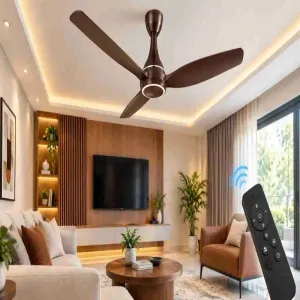
And, should you still have a traditional induction motor fan, upgrading to a BLDC fan is one of the best things you can buy to upgrade your home or workplace. They also have a feature packed remote fan model that has full speed, a timer, and even a sleep mode at extremely competitive prices today.
- Consumes less than 65 per cent of the electricity of a typical induction motor fan.
- Sealed, maintenance-free motor – does not need any oiling or internal cleaning.
- Much longer life span of operation because of less heat and wear.
- Came in the form of a remote control fan with intelligent speed options and sleep timers to provide extra comfort.
- Even at full speed, there is almost no noise.
- Works with voltage stabilisers and inverter systems.
10. Why the Quality of Your Fan Matters
You like their clean appearance of white ceiling fans or need modern contemporary modern ceiling fans with smooth lines and incorporated lights, spending on a good brand will be paid off in the long run. The fatter fans require less maintenance, have extended warranty and work properly in all seasons.
What to Check When Purchasing:
- Certification of the ISI mark in electrical safety.
- efficiency as per the BEE energy star rating.
- 2-year warranty (minimum) by manufacturer.
- Humid and coastal corrosion-resistant blade arms.
- Availability of after-sales services and spare parts in your city.
Ceiling Fan Maintenance Checklist
| Frequency | Task | Who Should Do It |
|---|---|---|
| Monthly | Wipe all blades with a dry microfibre cloth | DIY |
| Quarterly | Tighten screws, check balance, inspect ceiling mount | DIY |
| Every 6 Months | Inspect wiring, capacitor and regulator; lubricate if applicable | Technician recommended |
| Annually | Full deep clean, seasonal prep, motor inspection | Professional servicing |
The correct model that is maintenance-friendly can be found when you search for ceiling fans online you should find reliable brands with good networks of services and true specifications.
About Rotex
‘Rotex Fans is a new manufacturer of ceiling fans in India, which is reputed to provide energy-efficient and durable cooling systems in residential, commercial and industrial applications. The company is innovation-based, providing modern designs that have reliable performance and affordable prices. Rotex, according to its official information, is an OEM, and a private label manufacturer and has been in the fan industry since 2017 Founded and run by its owner and director, Mr Maulik Vasoya.
Innovation and customer satisfaction are the main features of Rotex, which focuses on quality testing, effective supply chains, and competent after-sales services. The brand would provide comfort with the help of the advanced technology at the same time affordable and sustainable. Rotex has a firm belief in performance and trust, and is in the process of growing by becoming a reliable supplier or manufacturer of cooling solutions in the Indian market.’
Conclusion
Ceiling fan is a long-term investment and like any other investment, it will pay off with regular care. Regular cleaning, tightening, and balancing of the blade, as well as seasonal checks, do not require much time at all, however, can extend the life of your fan, keep your electricity bills low, and make your home safe. In case your ceiling fan is old, noisy or inefficient, it might be time to consider what modern ceiling fans can do. The performance, energy-saving and comfort differences are really vast.
Ready to upgrade your home?
Explore Rotex Fans' full range of energy-efficient ceiling fans, stylish modern designs and low-maintenance performance.
Bulk buyers and dealers welcome
Rotex Fans — Quality You Can Feel, Comfort You Can Trust
Regular cleaning should be done once a month. However, in dusty conditions or during peak summer usage, it is recommended to wipe them every two weeks to prevent dust build-up that can strain the motor.
Wobbling is usually caused by uneven dust accumulation, loose screws, or a bent blade arm. Start by cleaning the blades and tightening all screws. If the issue persists, use a blade balancing kit to identify and correct the weight distribution.
A humming sound often indicates an electrical issue or a failing capacitor, while grinding usually suggests dry or worn-out bearings. You should have the fan inspected by a technician, as running a noisy fan can lead to motor burnout.
Most modern fans, including BLDC models, feature sealed motors that are maintenance-free and do not require lubrication. Only older induction fans with specific oil ports require a few drops of non-detergent motor oil annually.
The most common reasons for a drop in speed are a thick layer of dust on the blades or a weakened capacitor. Cleaning the motor housing and replacing the capacitor usually restores the original speed.
If your fan is more than 8–10 years old, requires frequent repairs (3+ times a year), or is highly energy-inefficient, it is better to replace it. Upgrading to a modern BLDC fan can reduce electricity consumption by up to 65%.
You should stop using the fan and call an electrician if you notice a burning smell, sparks, or visible fraying of wires or if the switch box feels excessively hot.